
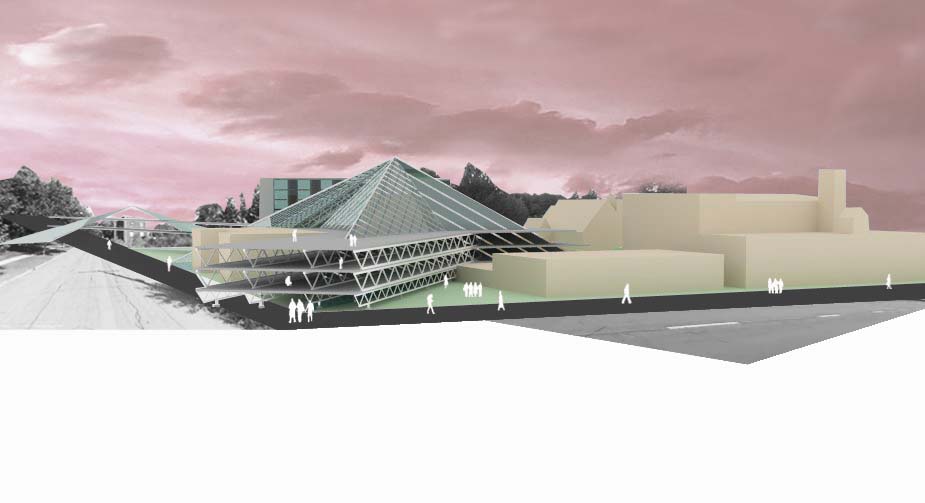
In the early to mid 1900s, Gary, IN boomed with business and industry. Since those prime years, Gary has undergone economic and social decline, abandonment, and poor infrastructure to suffice the population it once had. Currently, Gary classifies as a food desert with only two grocery stores, causing many of its residents to travel more than a mile to purchase fresh food and produce. Downtown Gary is one of the hardest hit areas in terms of business, residents, life and is home to an abundance of vacant lots and buildings in dilapidated conditions. With hope for a change and an outlet of opportunity, I as a designer and resident of Gary, propose that this land be use to help feed and educate residents on how to grow their own food within the mile radius of their home, more like their backyard. My intent for this project is to bring hope for the future of my community.


As site analysis and research of urban farms began, I stumbled across an interesting plant called the African Violet, that I believe behaves in the same manner as the residents of Gary. This ten petaled plant blooms and lives all year round by thriving off of neglect, requiring little care, water, sunlight, and warmth. When water is given to this plant, the water must be distributed to the roots of the plant, while nutrients is fed through the leaves. The residents of Gary can live, grow, and succeed on little to no funding, infrastructure, and positive attention from the rest of the world. Therefore, I believe the urban farm would best service the community of Gary if it directly responds to the similar behaviors of the native and the plant.
To achieve this goal, the Urban Farm consist of ten programs to act as the plant’s ten petals. In certain areas, the building’s envelope and structure will elevate a few of the programs over and lock into an aquaponics system. Contour lines and floating concrete slabs feed into the programs, acting as the nutrients for the building envelope.


 alexiscflowers.com